
Tulip grow guide
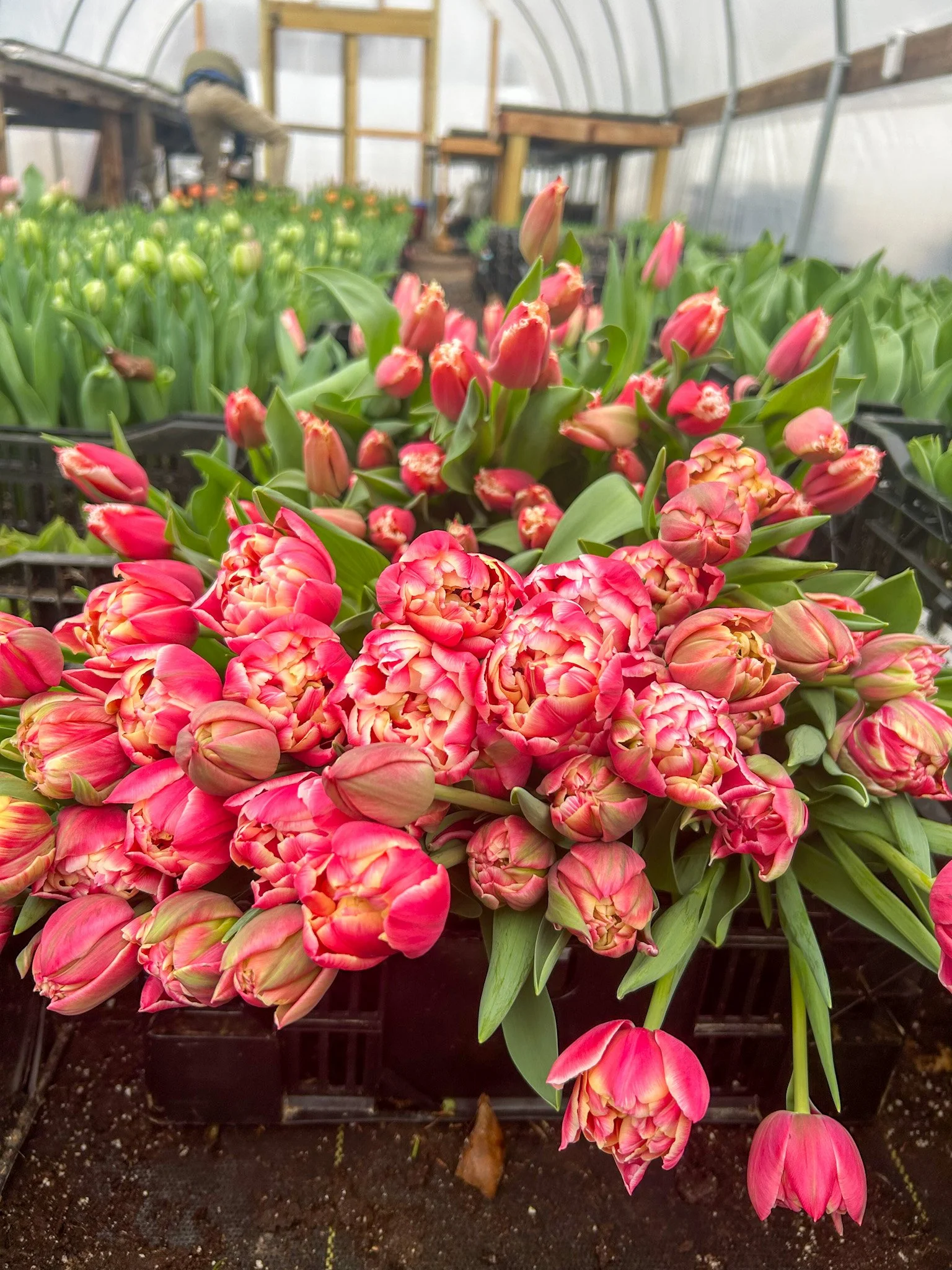
We grow specialty tulips 5 months out of the year! This is our advice on how to grow your own specialty tulips like a pro.
DAYS TO GERMINATION:
Plant bulbs in the fall for spring blooms.
SOWING:
Bulbs should be planted soon after arrival (or immediately after pre-chilling) and when the soil has cooled to 55°F (13°C) or cooler, and nighttime temperatures consistently drop to 40–50°F (4–10°C) but before the ground freezes. Planting about 5-6 weeks before the ground freezes allows the bulbs sufficient time for root development.
Store Bulbs if you can't plant right away:If you cannot plant right away, you can store bulbs for up to a month by following these steps. Open all bags and boxes and place bulbs in a cool, dark, dry area (such as a root cellar, basement or garage), with good air circulation. You can alternatively store your bulbs in the refrigerator crisper drawer, but do not store them with ripening fruits; ethylene gas released by ripening apples and other fruits can cause the flower inside the bulb to abort or incompletely form. Temperatures of 38–65°F (3–18°C) are fine; the cooler the better, but do not freeze your bulbs.
LIGHT PREFERENCE:
Sun/Part Shade. Full sun is ideal, but tulips will tolerate part shade, especially during hot weather. Tulips require at least 5–6 hours of sun per day at the time of bloom.
PLANT HEIGHT:
Varies by variety.
PLANT SPACING:
Tulips for annual cut-flower production: Space bulbs ¼–½" apart, like eggs in an egg carton (as close together as possible without allowing the bulbs to touch each other). Tulips in landscape beds or garden beds: Space bulbs 1–6" apart.
HARDINESS ZONES:
With some exceptions, many of the hybrid tulips do not naturalize for dependable blooms year after year. Therefore, cut-flower growers often treat tulips as annuals. Refer to individual product descriptions for more information. Parrot tulips grow best in zones 4–7. Double Late, Single Late and Darwin Hybrid tulips grow in zones 3–7. Darwin Hybrid tulips are known to perennialize /naturalize depending on care and location. If perennial production is desired, remove spent blooms, leaving stem and foliage intact until they naturally die back, turning yellow or brown.
STEM LENGTH:
Varies by variety.
VASE LIFE:
Approximately 10 days. Note that tulips "walk" in the vase; the stem continues to grow in the vase and bend toward the light, causing the flower to move over time.
HARVEST:
When the flowers show color, but before they begin to open. For optimal stem length, harvest by reaching to the base of the stem and gently pulling straight up. This method will add 3–6" of stem length, compared to cutting the stems at the soil line. For longer term holding/storage: Tulip flowers can be harvested with the bulb on the stem by lifting the bulbs with a garden fork and pulling up. Harvesting with the bulb in place (attached to the stem) provides a food source for the tulip during long-term storage. Stand tulips upright or bunch and wrap stems in paper to keep the stems straight in storage. For the home garden, if treating as a garden perennial: Avoid taking leaves when harvesting flowers, they are needed to manufacture energy for next year's blooms.
Deadhead any blooms you do not harvest. Wait until the plant leaves have turned brown before mowing over. Store stems in plain, clean water.
SOIL:
Tulip bulbs require a well-drained soil with pH 6.0–7.0. Amend the soil according to soil test results and as necessary to adjust the pH and optimize drainage. Planting in raised beds or the addition of compost can improve drainage. Avoid excess nitrogen and fresh manure.
NOTES:
Bulb size: Bulbs are sized at 12+cm. The circumference of the bulb at center is 12 centimeters or larger. This is "Top Size" and the standard for cut-flower and garden tulips.
Inspecting your Bulbs:The exterior of the bulbs may have a small amount of blue mold (Penicillium) present. This is typical and rarely a concern to the health of the bulb or your soil. Bulbs may have small scuffs or scars from the harvest process, and outer skin of the bulb may not be fully intact. This is also common and will not affect the productivity of the bulbs.
PESTS AND DISEASES
Botrytis blight (Botrytis tulipae; also known as tulip fire) is a fungal disease that causes soft brown spots on leaves, stems, and flowers. It can progress rapidly and kill large numbers of plants. Reduce the risk of Botrytis blight by planting in well-drained soil and avoiding overcrowding plants. Avoid excess nitrogen, which can weaken plants, and be sure to clean crop debris from the field/garden each year. Destroy infected plants and rotate out of infected soil for at least 2 years. Aphids can attack plants and spread virus. Control with a horticultural soap, or, if growing in a greenhouse, the parasitoid wasp Aphidius is an alternative option.
Scientific Name:
Tulipa spp.